

Bounce rate is one of the most misunderstood metrics in analytics. Business owners either ignore it entirely or fixate on it like it’s a diagnosis of website failure. The truth sits somewhere in the middle: bounce rate isn’t good or bad on its own — it’s a signal. And if you misread that signal, you end up fixing the wrong problems.
To make sense of it properly, we need to clear up a few common myths:
Myth 1: A high bounce rate means your website is performing badly
This is the biggest misconception (and probably the number one thing that we hear from frustrated business owners): the idea that a bounce is automatically a negative result.
Reality:
A bounce only means that someone viewed a single page and left. It says nothing about why they left.
Some pages are supposed to have high bounce rates:
- A contact page where all they needed was a phone number
- A blog answering a specific question in the first paragraph
- A pricing page a referral clicked, screenshotted, and sent to a colleague
In all of these cases, a bounce is the correct outcome.
I had a call with a client who was worried about an 80% bounce rate on a particular page of their website. They wanted to completely redo the copy on the page, and were almost ready to start the whole thing from scratch, when I pointed out that the page in question was a news article they'd written about a recent company event.
The page was purely informational, and linked from their social media accounts, so most likely a large portion of their visitors were only interested in the particular article, and not the services they were offering.
The real question isn’t “Why is my bounce rate high?” It’s “Is this page doing the job it exists to do?”
If the answer is yes, the bounce rate doesn’t matter.
Myth 2: A bounce rate is a conversion metric
People often assume a bounce rate tells you how convincing your page is. Don't fire your marketing team/content writer just yet — it might not be their fault!
Reality:
Bounce rate is a behaviour metric — not a persuasion metric.
You can have:
- A low bounce rate and awful conversions
- A high bounce rate with great conversions
- A “normal-looking” bounce rate masking poor-quality traffic
Bounce rate only describes movement: stay on this page vs go somewhere else. It doesn’t tell you whether the visitor understood you, liked you, trusted you, or wanted your services.
You need to combine bounce rate with other signals:
- Scroll depth
- Time on page
- Button or form interactions
- Traffic source quality
- Entry page intent
Bounce rate on its own can’t tell you whether the website is winning or losing. It's like judging a weight-lifting program by the number of curls you do on a Thursday.
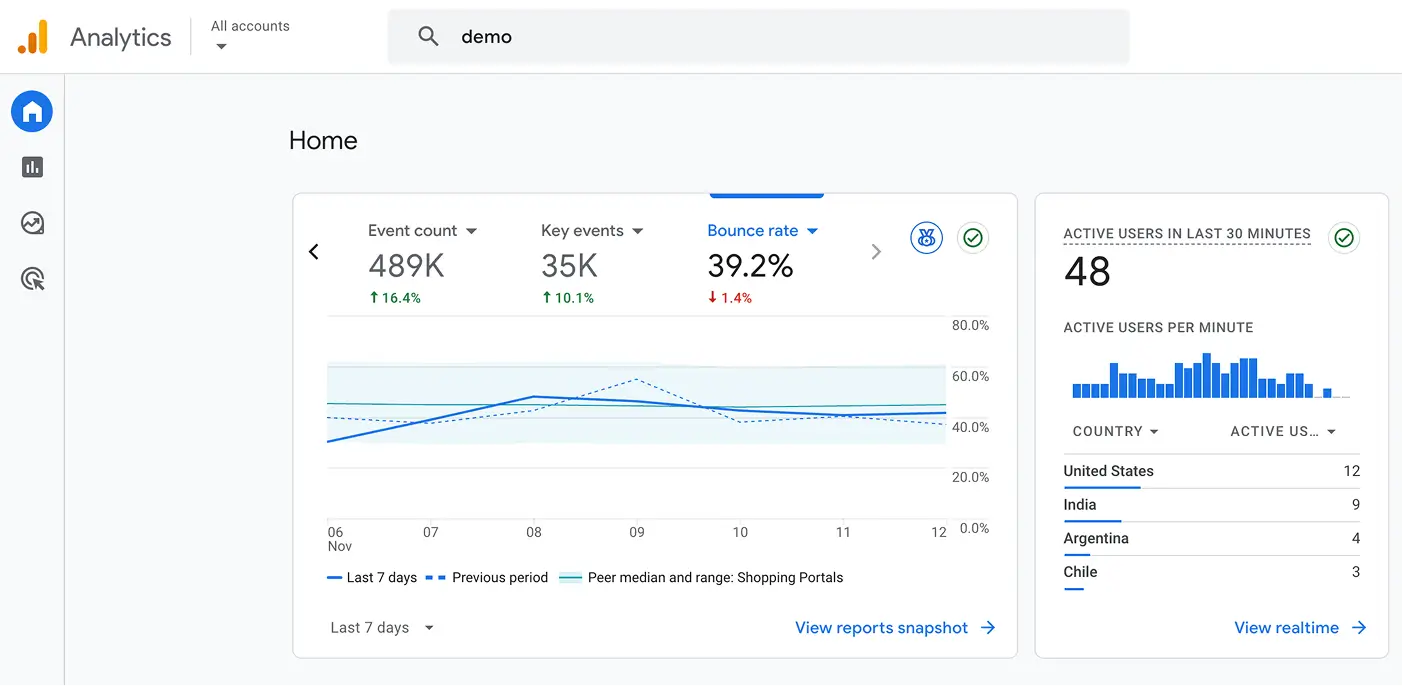
Myth 3: If your bounce rate is high, it means the content is bad
This one leads to unnecessary rewrites and “more content for the sake of content” — which iroinically causes more issues than it solves (but that's another article).
Reality:
High bounce rate often comes from a mismatch between visitor intent and page purpose, not poor writing.
A few examples:
- Google sends someone looking for “DIY boiler repair” to your boiler installation service page. Close, but no cigar
- A blog post ranks for a keyword you didn’t mean to target
- A Facebook ad drives curiosity traffic instead of buyer traffic
- Your meta title promises something the page doesn’t deliver
- Someone looking for an address accidentally lands on your homepage
The content might be fine. The wrong people just showed up.
Before rewriting a single sentence, check who is landing on that page — and why. If there's natural tweaks or additions you can make to the content, then do so, and measure the results.
Myth 4: You should aim for the lowest bounce rate possible
Business owners often see bounce rate the same way they see golf: the lower the better. Whilst this is generally true, it's not a precise indicator of a great site.
Reality:
A very low bounce rate can be a sign of a problem.
Bounce rates under ~15-20% can often indicate:
- Double-counted analytics
- Incorrect tracking
- Fake traffic
- An event firing and cancelling the bounce
- A script loading twice
On the flip side, very high bounce rates (70–90%) might be normal for blogs, landing pages, or any page where a single, quick action is expected.
There’s no such thing as a universal “perfect bounce rate”. What actually matters is whether the page does its job — and, more importantly, whether those visitors are converting into real enquiries.
Myth 5: You can fix bounce rate with a single quick tweak
A popular belief: change the headline, speed up the page, add a bigger CTA — boom, bounce rate fixed. It’s like repainting the walls when the damp is coming from behind them.
Reality:
Bounce rate usually comes from a combination of factors that work together:
- Speed: Slow sites chase people away before the content loads.
- Clarity: If the message isn’t obvious in the first 3–5 seconds, visitors give up.
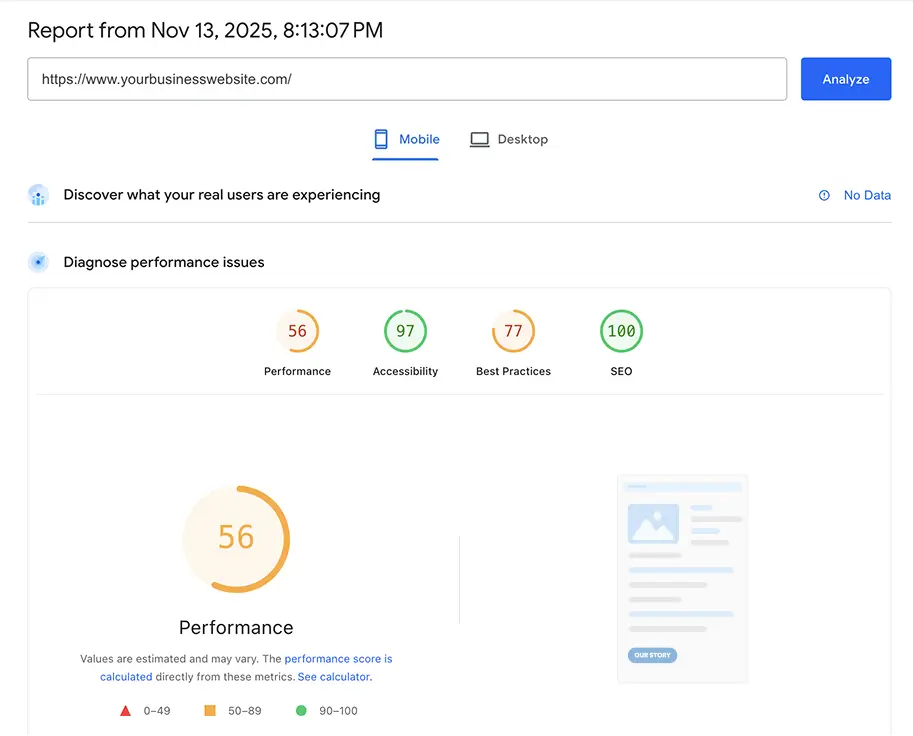
- Trust signals: Stale design or generic/blurry imagery makes people uneasy.
- Structure: If the page is visually heavy, people don’t do the initial scan-and-commit.
- Traffic quality: If the wrong people land, they’ll always leave.
Fixing bounce rate isn’t about one magic tweak — it’s about alignment.
Your message, design, and traffic must all point in the same direction.
What bounce rate actually means for your business
When you interpret bounce rate properly, it becomes less of a stress point and more of a strategic tool. It can highlight:
- Pages with mismatched intent
- Landing pages where you haven’t clarified your value fast enough
- Service pages that look great but attract the wrong audience
- High-performing informational pages that don’t need changing at all
It can even reveal opportunities: if a page gets lots of impressions but bounces quickly, there’s a potential win hiding in plain sight. Say your “managed IT support” page gets a surprising number of impressions for “cyber security audits”, even though you only mention cyber security in passing. Visitors might leave because you don’t highlight an offer for them. But the demand is sitting there in your analytics — a potential new revenue stream waiting to be tapped for something that you may already (or could feasibly) offer. A simple additional "Services We Offer" card, or an extra bullet point in a list could mean a ton of new business!
Bounce rate doesn’t tell you whether your website is good.
It tells you where to look next.
We can help
If your bounce rate looks worrying and you’re not sure what it actually means for your business, get in touch — we can review your analytics, diagnose the real issues, and help turn those visits into enquiries.


.svg)