


I'm sure you know you should be collecting reviews from your customers, but the likelihood is that you're not doing it consistently. This probably isn't because you don't care, but rather because it just feels... awkward.
Chasing people.
Sending reminder emails.
Hoping they'll write something nice about your business.
After a while you start feeling like a needy girlfriend — hanging around, waiting for validation, desperate for someone to finally reply...
Trust me, I've been there — it can feel really uncomfortable asking a customer for a review, especially when it's been a while since you last spoke.
Thankfully, all you need to get your dignity back is a simple, repeatable system that makes leaving a review effortless — and makes asking for one feel natural, not needy.
Here’s how to get more Google reviews while still being able to look yourself in the mirror.
1. Fix the real problem: zero process
If reviews only happen when you “remember to ask,” you won’t get many. You need a repeatable moment in your workflow where the request happens every time, without fail.
Good triggers:
- After a job is completed and approved
- After a client says “thank you” or gives positive feedback
- When delivering a final report or project handover
- After a follow-up call when the client expresses satisfaction
It doesn’t need to be complicated — it just needs to be consistent. And no, a brief note in your email signature isn't going to cut it (I tried that one — nobody pays attention to your signature!)
2. Create a frictionless link
Don't make people work to leave you a review. Scrolling, searching, clicking around to find your profile.
Take 20 seconds and send them a direct link to your Google profile.
This takes your customer straight to the review box. No hunting. No confusion. One tap. More reviews.
Once you’ve got the link, you can drop it anywhere: emails, SMS, PDFs, WhatsApp, onboarding docs — wherever your clients already talk to you.
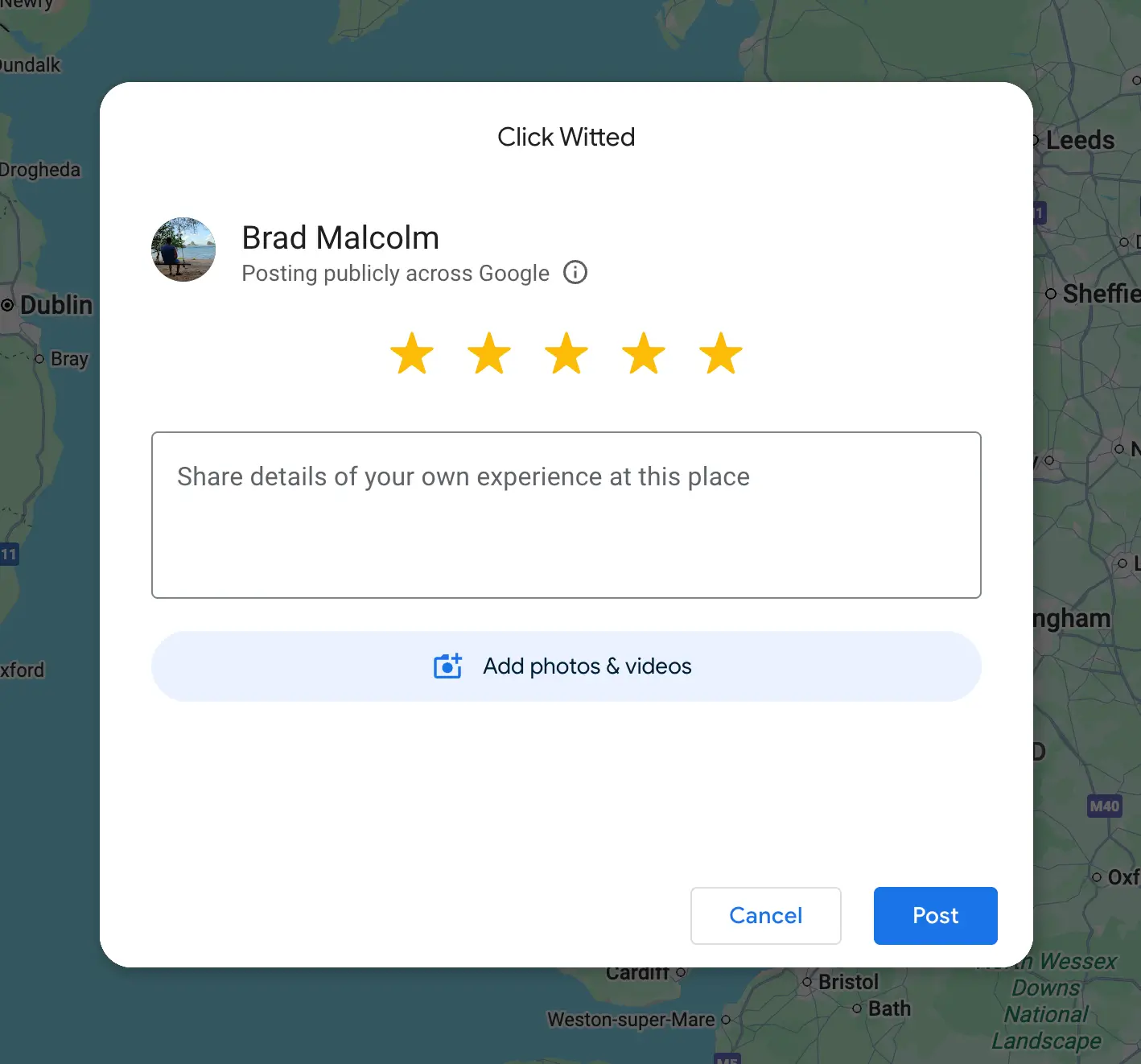
3. Use a short, honest script (no begging required)
Customers don’t mind being asked for reviews — they mind being pressured. A good request is quick, human, and gives a clear reason.
Example:
“Glad everything’s all sorted for you. If you’ve got 20 seconds today, would you mind dropping a quick Google review? It really helps us show others what we do.”
It’s not pushy. It’s not desperate. It explains why it matters. And importantly, it’s short. Check out our script in the next tip:
4. Give clients a simple template
Obviously, don't write their review for them (that would be super unethical and against Google's terms of service) — it’s about removing writing anxiety. Many clients delay or skip reviews simply because they don’t know what to say.
Offer a nudge:
“If it helps, you can mention things like the quality of the work, communication, or the results — whatever stood out for you.”
People write faster when they know the boundaries. Here's our script which you can copy/paste and adapt to your own:
Hey XXXX
Thanks again for trusting us to handle X PROJECT for you! Hope you're happy with how everything went :)
Could I ask you for a cheeky favour? We're sitting pretty low on our Google reviews right now, and I'm trying to boost them to help us get more work through the door.
Would you mind writing us a quick review? I would be eternally grateful and it should only take a few minutes of your time...
If you’re not sure what to write, here’s a helpful guide — but feel free to put it in your own words:
- What kind of project we helped with
- What the process was like
- Any positive changes you might have seen in your business since the new website went live
- Whether you’d recommend us to others
You can access the page here: LINK HERE
Thanks again!
Once we started using a template, our clients started leaving reviews much faster — in fact, this very script helped us get some of the lovely reviews you'll see later in this article.
5. Automate reminders (lightly)
Not everyone writes a review the moment you ask. A gentle reminder 3–7 days later captures the people who intended to review but forgot.
This can be:
- A follow-up email
- A scheduled SMS
- A short WhatsApp message
- A line added to your existing follow-up workflow
No nagging. Just a polite nudge.
6. Make reviews part of your onboarding
Maybe the most overlooked move. Tell new clients upfront that you rely on honest reviews to keep improving and to build trust.
You set expectations early, remove awkwardness later, and turn reviews into a normal part of the relationship.
7. Showcase your reviews
The more you highlight your reviews, the more customers see that you value them. This encourages others to leave one because they feel their words won’t vanish into the void.
Add reviews to:
- Your website service pages
- Your email signature
- Social media posts
- Proposal decks
- Case studies
You want to pepper your entire digital presence with social proof.

8. Close the loop by thanking customers
A quick thank-you message after someone leaves a review makes them feel appreciated and increases the chance they’ll recommend you further. Happy customers spread your name faster than any SEO trick.
Final thoughts
You don’t need to beg for reviews. You just need a smooth request, a clear link, a soft reminder, and a workflow that doesn’t rely on memory.
If you need a new website, we’ll build in a simple review system for you — templates, scripts, the lot. Just get in touch.


.svg)